Anon Case Study.

The Problem
Retail employees and managers often have limited, ineffective ways to report shoplifting while it is happening. Employees may notice suspicious behavior, but confronting a potential shoplifter can put them at risk. Managers also struggle with slow reporting processes, incomplete details, and delayed communication with security. As a result, shoplifting incidents often go unresolved, and stores lose the opportunity to respond before the shoplifter leaves.

The Solution
The retail industry needs a faster and safer way for employees and managers to report shoplifting. Instead of asking workers to confront suspicious customers directly, the industry needs a system that gives them a way to submit anonymous reports, alert management, and help security respond before the incident escalates.
The Research
Me and my partner, Collin Tinschert, investigated the Tanger Outlets in Deer Park, NY to get a better understanding of the experience revolving shoplifting in that area. We conducted several interviews, surveys, and shadowing observations to truly get to the bottom of the problem

Research Methods
2 Site Visits
10 Shadowing
10 Interviews
3 Surveys
Site Visits & Shadowing


Me and my partner conducted two site visits of the Tanger Outlets that started with simple observations, and eventually led to some key interviews and shadowing observations. We conducted a total of 10 shadowing sessions between the both of us, and learn some interesting things through it.
We observed individuals roam the malls, shop as they please, and interact with some interesting devices at the mall,. We observed an older couple use the interactive map to try and locate specific stores. It had some noticeable limitations such as the sensitivity being low, making it difficult to use this device.There were vending machines that provided coupon books that can be used at the Tanger Outlets. The inclusion of apple pay devices was observed as well. Me and my partner started to think, even if these devices were flawed n their own ways, customers and employees a like felt comfortable and competent enough to use these devices to make their experience at the mall flow better.
Interviews
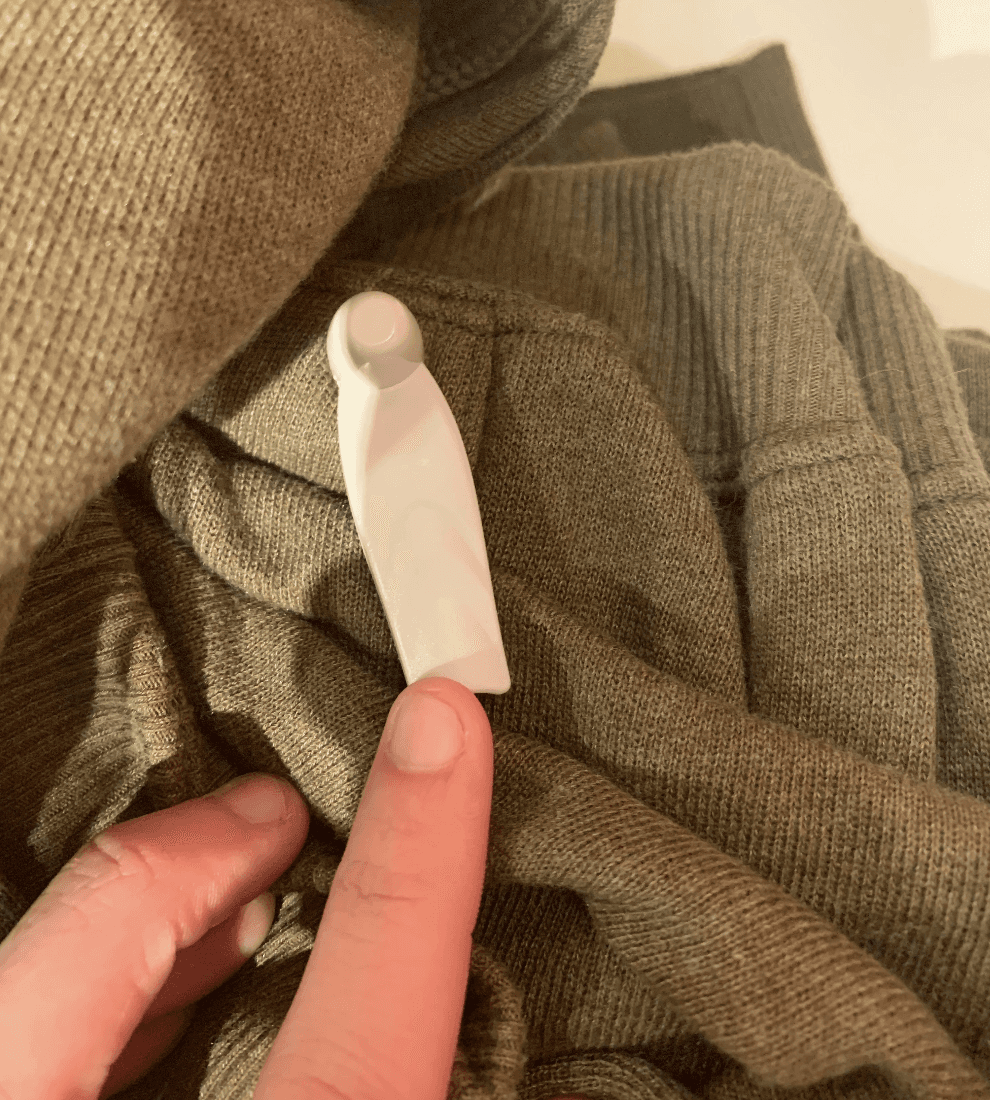
Me and my partner conducted 10 total interviews with customers and employees to understand common problems in shopping environments. The interviews explored shoplifting, congestion, employee safety, store operations, and customer frustrations.
Many of the employees and customers expressed a deep disliking for the shoplifting they observe at the mall outlet. Michael, a 20 year old employee at Express, claimed that shoplifting happens almost everyday and causes financial issues for his store. He even stated “We experience a lot of shoplifting at Express, people either stuff clothes in their bags in the dressing rooms, or they steal an item and leave as quickly as possible.” Mary, a 55 year old employee at Neiman Marcus also stated “Some customers would try to switch labels and tags on expensive clothes, for cheaper ones. This was done to make the expensive clothes seem like they were less expensive when purchasing”.
Surveys
Version 1
We conducted two surveys for individuals that either go to malls on any frequency or work in the environment. The first rounds of surveys was geared to learning what problems and observations really stick with those two focus groups. We discovered that crowding, card payments, and time management were some big issues that participants had noted through the survey. Over 60% of customers felt crowding negatively affected their parking experience while 70% agreed that it negatively affected their overall experience.7o% of customers felt that it was inconvenient when stores or food vendors only accepted cash and over 40% of shoppers stated that their trip to the mall takes longer than intended. Very few participants openly spoke on shoplifting the way the participants of the interviews did, so we decided to tweak the next round of surveys to directly address it. The results had an interesting shift in energy from the participants.
Version 2
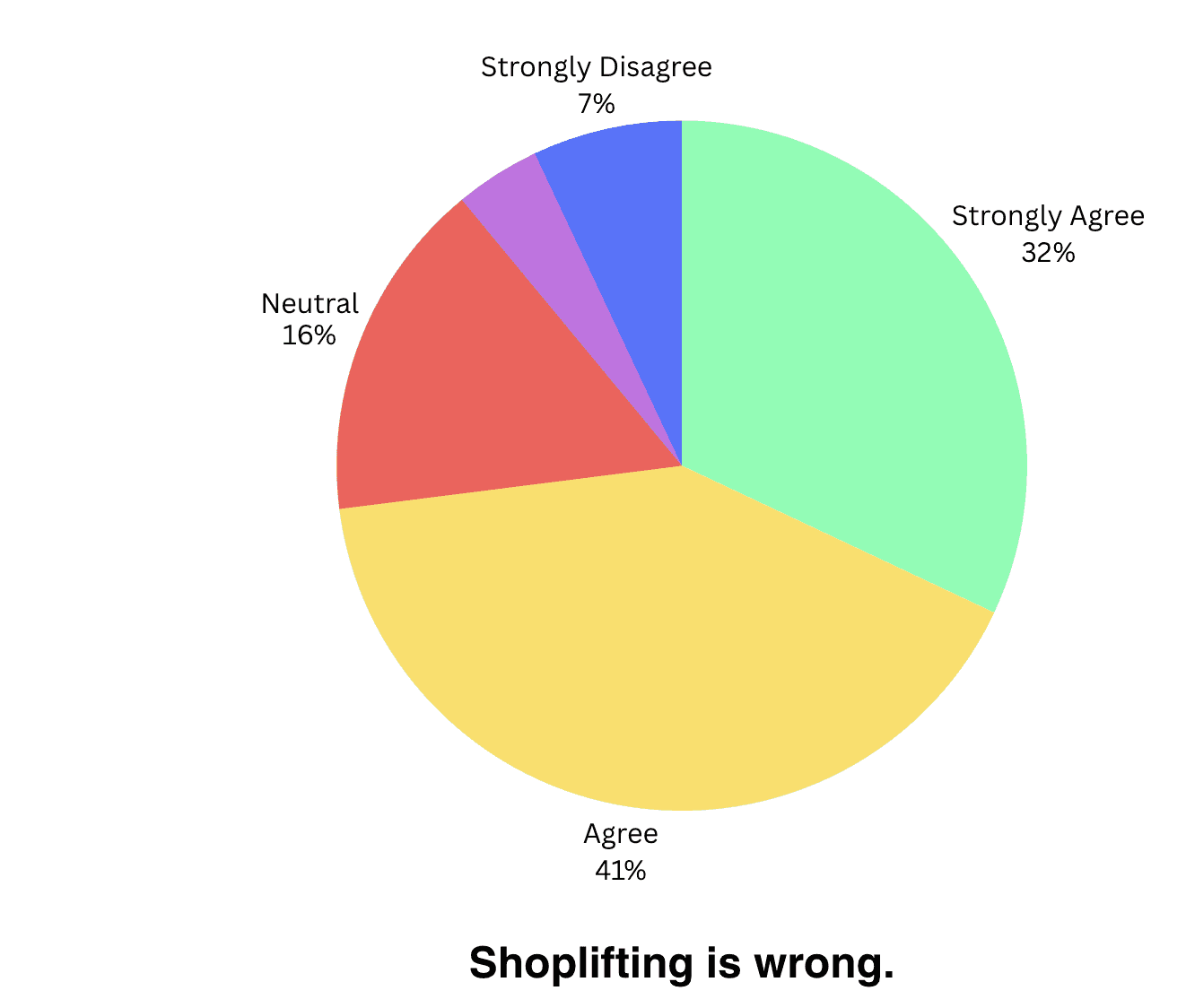
The second version garnered 355 participants with some insightful things to add about their experience at the mall, specifically with shoplifting. 257 of the 355 participants agreed that shoplifting was wrong and almost 75 percent stated that they would not confront a shoplifter. Despite 74% of these participants agreeing that they understand why shopliftes steal from stores and the majority stating that shoplifting wouldn't cost them money in the end, we saw 68% agree that shoplifting was preventable.
The workers that participated had there own opinions on the matter. Almost 50% of the workers who took the survey, have been working and physically seen shoplifting take place. Out of the 50% of workers, 70% of them stated that they would contact management if they saw shoplifting while working. The workers that contacting their managers were told no to confront them, and some of these workers agreed given the fact that they didn't want to confront them.

Results


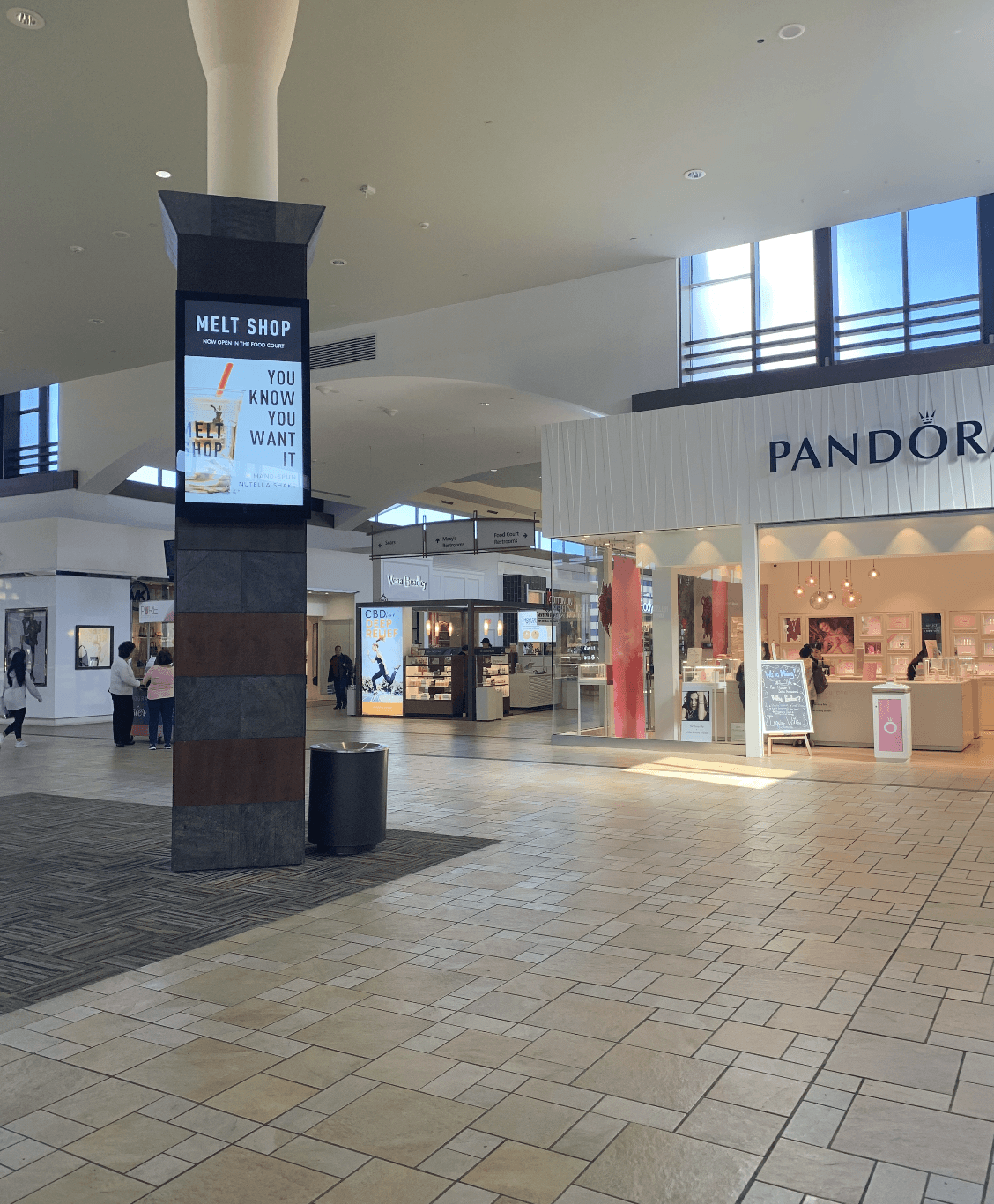
We discovered that shop lifting occurs frequently, but both employees are instructed not to confront shoplifters and customers are not incentives to confront shoplifters either due safety concerns and a distinct dissociating from the potential consequences. Managers and employees described the reporting process as tedious, slow, and often ineffective after the shoplifter has already left. Survey results showed that even though most people believe shoplifting is wrong, many would not personally confront someone in the act.
The retail industry needs a system capable of addressing these factors of the current shoplifting issues. Managers need a way to see where an incident happened, who reported it, what merchandise was involved, and whether security should be alerted. employees need a safe way to conduct these reports without concerns for their safety.
High-Level Value Proposition
Anon is an anonymous shoplifting reporting system that helps retail teams protect employees, reduce confrontation, and respond to theft in real time through mobile reporting, store mapping, manager alerts, and security coordination.
User Archetypes
Customer Relationship

Employees
Employees are the ones that see the issue first hand on a regular basis. They can neither avoid or confront them. This focus group are the direct supporter of this case, given they are the ones that will directly be involved in these future situations.

Management
Managers are the indirect supporters of this project. They will be the ones that can give the final call on wether this project will positively affect their vendor's experience revolving the issues with shplifting.

Customers
Customers are almost in the same boat as the employees. They may not have a direct involvement in the problem at hand, but they can actively see the benefits of this project given that they see it occur while they are actively conducting themselves in better standings than individuals that decide to shoplift from these establishments.
Personas


Empathy Maps


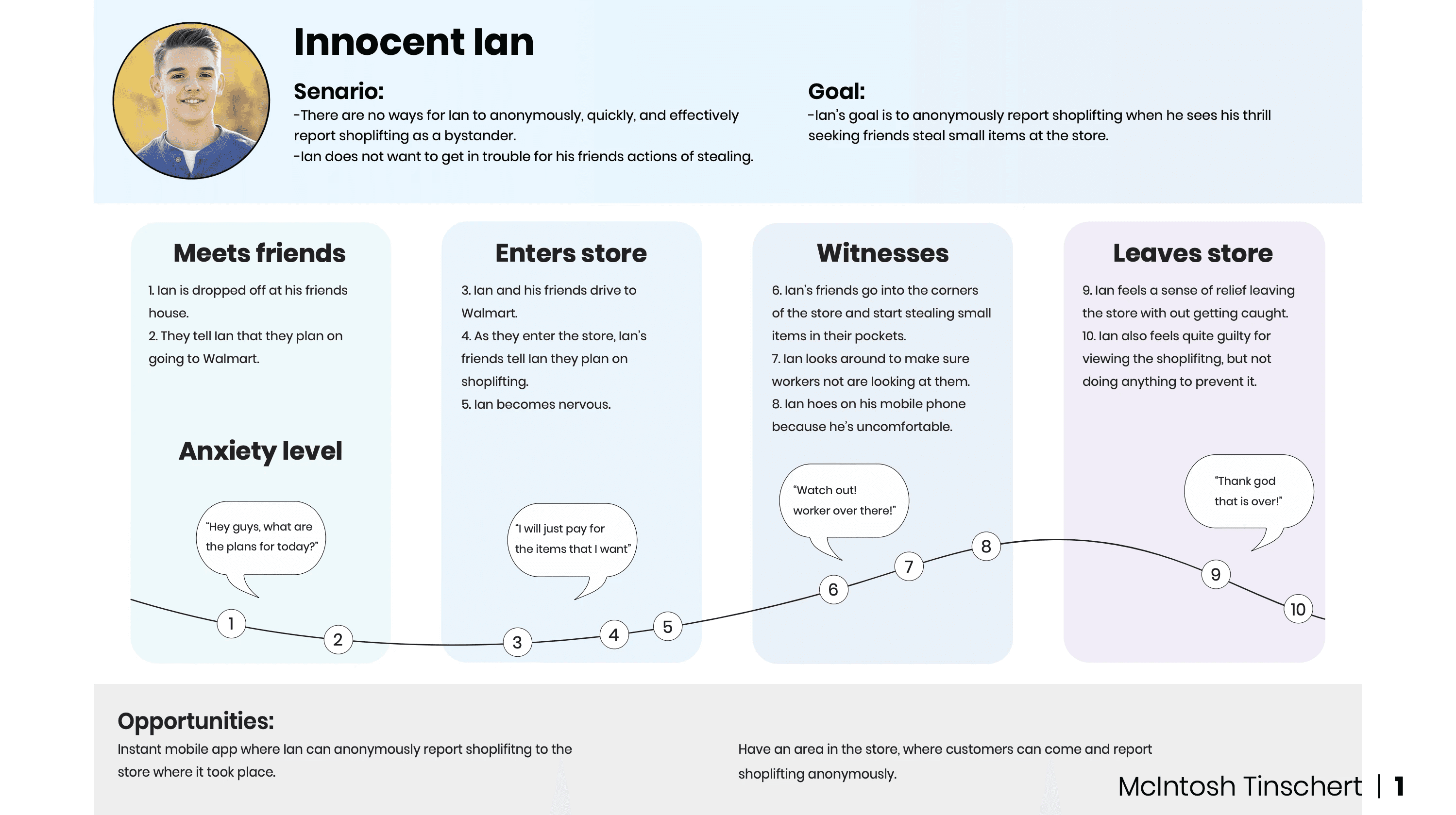
Journey Maps


Design Fiction
Shoplifting Kids Caught in the Act
Brad and Ian, two high school seniors, are hanging out in the cafeteria when Brad invites Ian to go to the mall with him and Trina. Ian agrees, thinking it will be a regular day at the mall. After exchanging greetings, Brad tells Ian that he plans to shoplift from the stores they plan on entering and entices him to steal from the stores as well. Ian is nervously reluctant and tells him he will simply pay for his own clothing. As they enter the store, they navigate a rough but clever plan to conceal their actions in the corners of the store while Ian watches out for the employees and security.
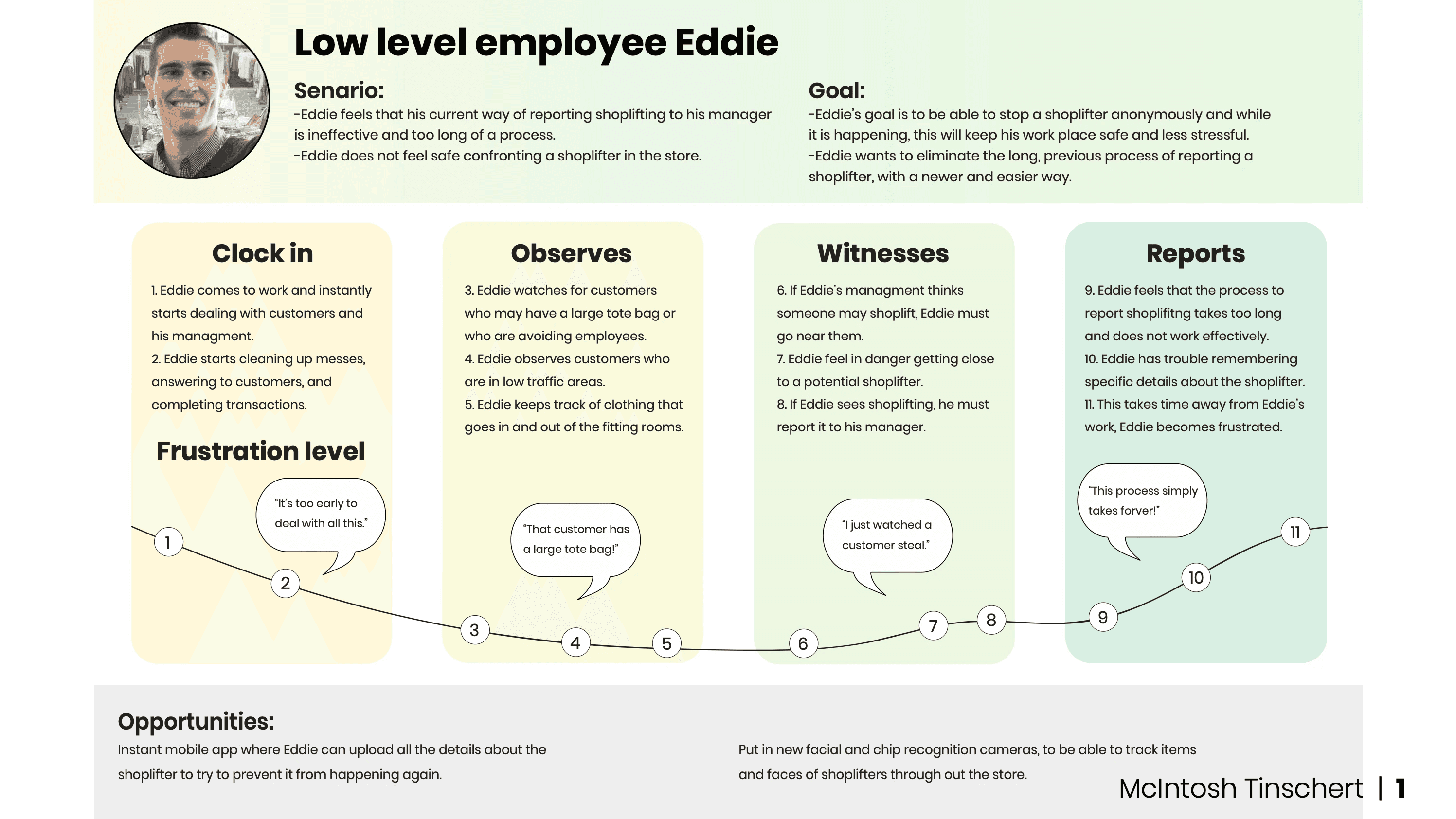
Michael, Eddie's manager, notices the teenagers and tells Eddie to check on them. Eddie complies and approaches the teenagers. Ian notices and warn his friends before Eddie can get close and ask if they need help with anything. Brad anxiously turns Eddie down, leading Eddie to be even more suspicious of them. Eddie gives them some distance, allowing him to pull out his phone and enter the Anon phone app. Through the app, Eddie is able to send a report to Michael.
Michael receives the report through the Anon+ app on his company tablet. He opens the full report and reviews the face IDs of the teenagers and the tag IDs obviously pinned to the teenagers clothing, as if they snuck the merchandise under their shirts. This is all Michael needed to send a alert to security. Security gets to the store just in time to catch the teenagers before they can leave. Security takes pity on Ian and Trina and tells them to return the merchandise and leave. Brad on the other hand, previously flagged by Anon's faceID system, was not so lucky as security tells him to go with them back to the office. The store employees have a brief celebration of busting the kids before they could get away with it.

Sketching the Interaction
Brief Sketchs


System Flow Charts


The Interactive Model

Anon
For Employees and Bystanders
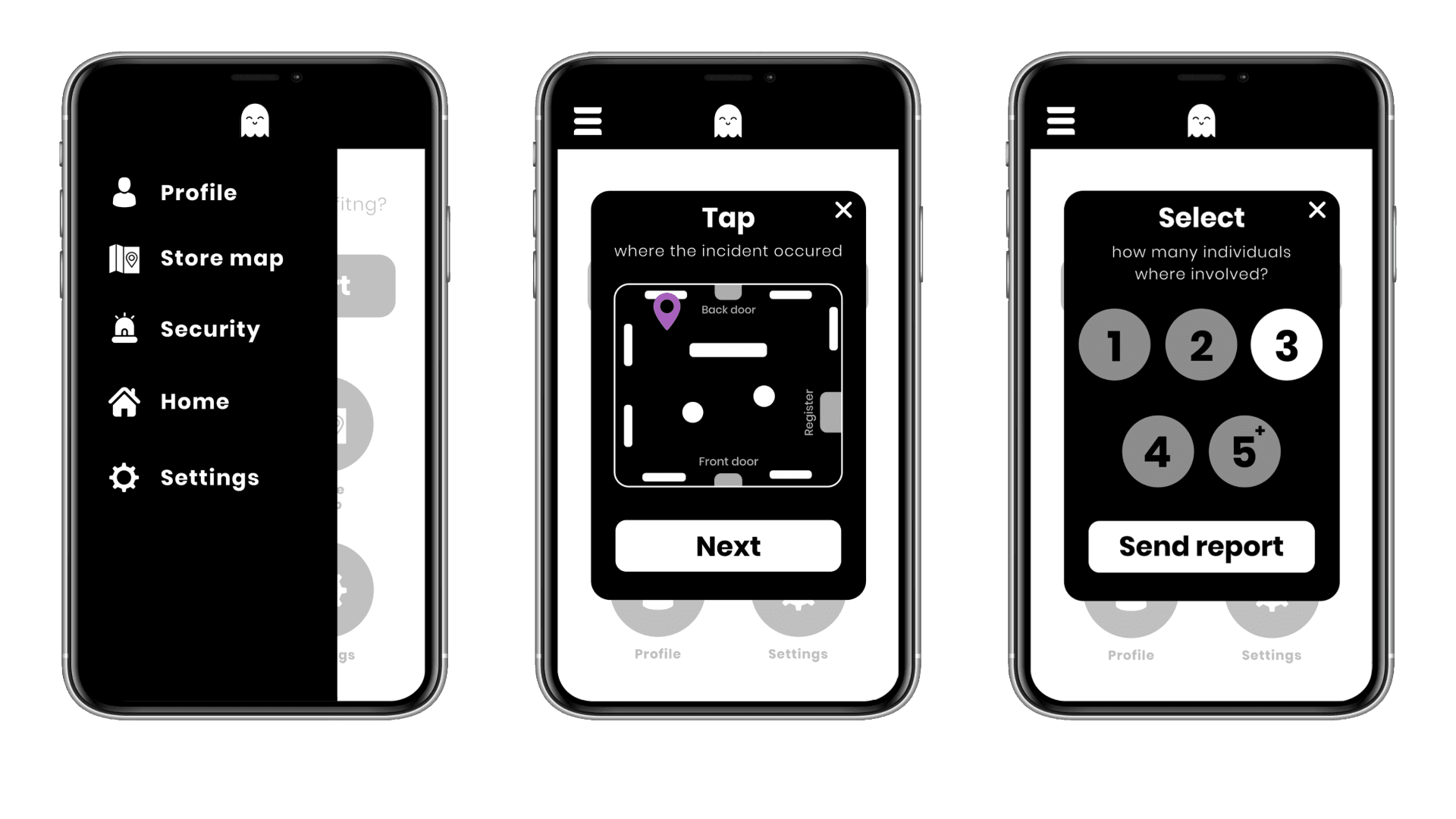
Anon is the simplified mobile reporting tool. It allows users to quickly report shoplifting by marking the location, identifying the number of people involved, and sending the report to management.

Core Functions
Create shoplifting report
Drop a pin on store map
Identify number of individuals involved
Alert security
Receive store notifications
Access profile, settings, and menu
The AR part of the system is meant to make the repair experience practical in the moment. Peered with the bridge mode, the AR glasses allow them to respond to the layout repair process in real time, review potential steps they may have skipped, and contact another pier or professional. This experience is meant to be the end all tool, not another voice telling them what to do without a clear understanding of the process.
Anon +
For Managers
Anon+ is the manager-facing tablet system. It gives managers access to reports, cameras, store maps, TagID data, customer/store status, and direct security alerts.

Core Functions
View new and past reports
Access security cameras
View store map
Track merchandise status
See customer/store activity
Instantly alert security
Access profiles, reports, settings, and menu

The Takeaways
This project helped me understand how interaction design can support safety, communication, and decision-making in physical retail spaces. The research showed that people often notice problems but do not act because the available reporting methods are too risky, slow, or unclear. Anon explored how mobile reporting, store mapping, manager dashboards, and security alerts could work together to create a safer and more responsive retail environment.
Anon reframes shoplifting prevention as a safer communication system rather than a direct confrontation problem. By giving employees and bystanders a way to report incidents anonymously, the system protects workers while giving managers faster visibility into what is happening inside the store. The design also supports better documentation, quicker security response, and more informed decision-making.
Like (Love) My Work?
Contact me to discuss your case!
I am currently based in Long Island, NY.