Simple Solar

The Problem
Long Island residents were interested in renewable energy, but many were unsure how solar adoption actually worked. Some were discouraged by cost, roof conditions, long-term home stability, credit requirements, or negative sales experiences. The research also showed that people may understand the benefits of solar in theory, while still lacking the confidence to take action.
A key research insight was that homeowners experienced a wide range of barriers around financial credit, cost, housing conditions, distrust of salespeople, and long-term maintenance concerns. The team also found that users did not have one clear place to ask questions or find straightforward information, which made the industry feel harder to trust.
Project Overview
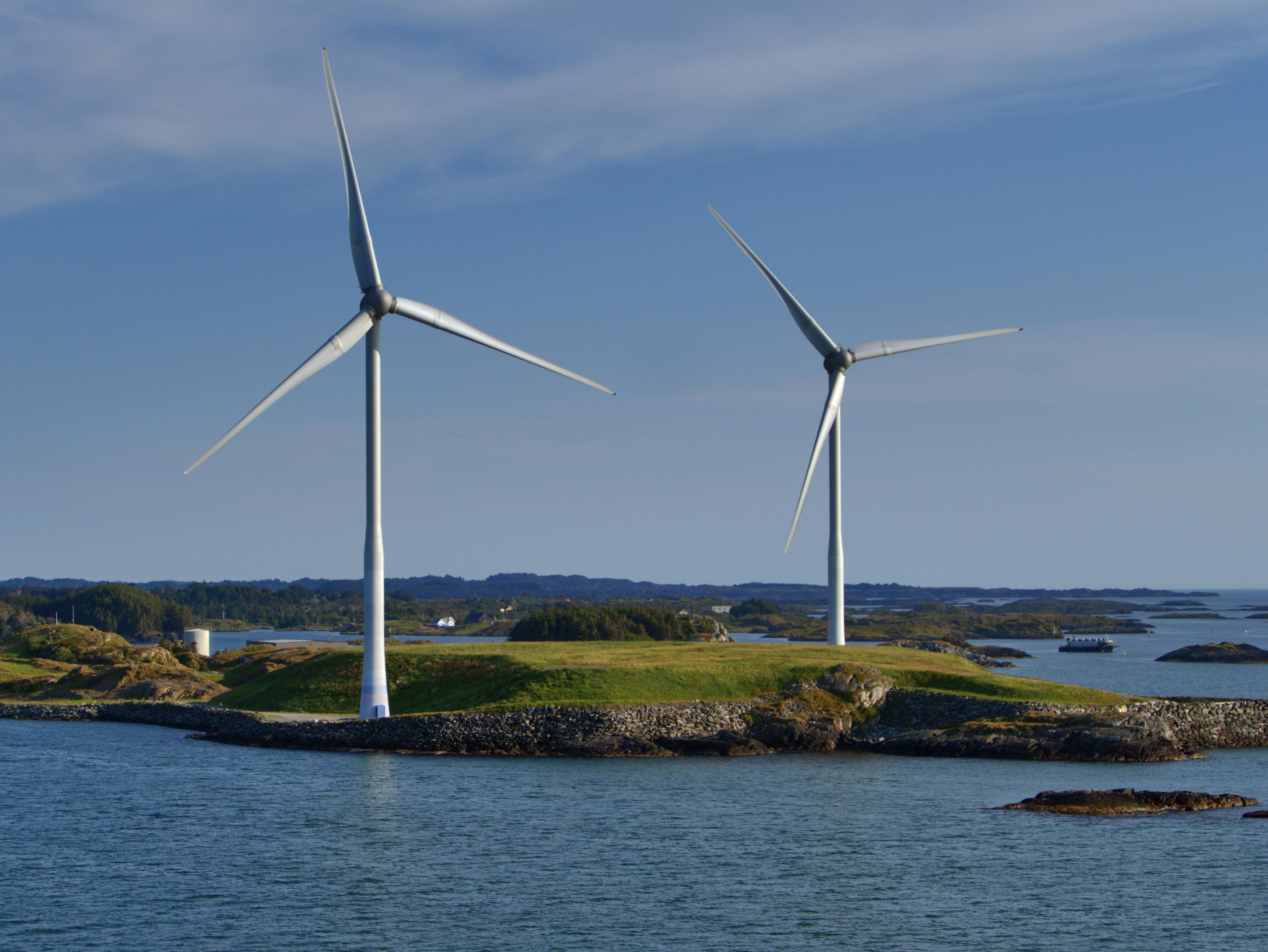
Simple Solar was developed as an educational design project for USGBC-LI, focused on making renewable energy information more approachable for Long Island residents. The project explored how homeowners, business owners, and local property owners understand solar energy, what misconceptions prevent adoption, and how a visual communication piece could simplify alternatives such as community solar and renewable energy credits.
This section should explain that the goal was not just to “make a brochure,” but to create a clear public-facing communication tool that could help people understand sustainable energy options. Your project scope specifically framed the need as maintaining and expanding solar energy advocacy during and after the COVID-19 pandemic, while also helping USGBC-LI reach audiences around LEED certification and solar power technology.
The Research
The research focused on understanding what Long Island residents already knew about renewable energy, what information they were missing, and what would make solar alternatives feel more accessible. The team used surveys, stakeholder conversations, personas, and information architecture to translate technical renewable energy topics into language that felt more useful to everyday residents.
The original research plan focused on identifying user knowledge around economic benefits, environmental benefits, LEED awareness, and open-ended beliefs about renewable energy. It also planned for personas, empathy maps, journey maps, and information architecture to determine what information was most necessary, impactful, and relatable to Long Islanders.
Stakeholders Interviews

Our stakeholder research focused on understanding the real barriers that prevent Long Island residents from transitioning to solar energy. Through conversations with USGBC-LI, EmPower Solar, and the FSC Renewable Energy & Sustainability Center, we learned that the issue was not simply a lack of interest in renewable energy. Many residents were confused by cost, installation requirements, roof limitations, long-term savings, and the differences between rooftop solar, Community Solar, and Renewable Energy Credits. These insights helped shape the project into an educational communication tool designed to make solar alternatives feel more accessible, understandable, and locally relevant.
Surveys
To better understand public hesitation around solar energy, our team developed surveys for Long Island residents, homeowners, business owners, and property owners. The goal was to identify what people already understood about renewable energy, what confused them, and what concerns prevented them from taking action.
The survey focused on user identity, renewable energy awareness, economic benefits, environmental benefits, LEED familiarity, and barriers to solar adoption.

In the first survey, 30.4% of respondents agreed or strongly agreed that cost prevented them from going solar, while another 30.4% remained neutral. 43.4% of respondents agreed or strongly agreed that they were skeptical of solar because they may move to another house. Roof condition responses were spread across agreement, disagreement, and neutral answers, showing that roof readiness affected users differently. Responses were evenly divided around whether solar salespeople deterred adoption, which suggested that trust and communication were major factors.

Literature Review

Our online research examined renewable energy from both a broad environmental perspective and a Long Island-specific perspective. We reviewed academic sources, local energy reports, and sustainability organizations to understand why solar adoption remains difficult despite growing public interest. The research revealed that cost, municipal restrictions, confusing permit processes, and limited public education are major barriers. It also showed that Community Solar and Renewable Energy Credits could help residents participate in renewable energy without needing rooftop panels. This research helped us position Simple Solar as an educational bridge between complex energy systems and everyday Long Island users.
Results
The final outcome of the project was a public-facing educational brochure designed to make solar energy feel more approachable for Long Island residents. Instead of only promoting rooftop solar, the final design focused on Community Solar and Renewable Energy Credits as more accessible options for users who may not own ideal property, may be concerned about cost, or may not fully understand how solar alternatives work.
The research directly shaped the final content strategy. Survey work focused on understanding why residents were hesitant to transition to solar, including concerns around pricing, roof conditions, home stability, credit score, and past experiences. The survey received 47 responses for the cost and roof-condition questions, giving the team a clearer sense of what barriers needed to be addressed in the final design.
Stakeholder input also influenced the final direction. EmPower Solar helped the team understand the solar purchasing process and common misconceptions in the solar industry, while the FSC Renewable Energy & Sustainability Center helped clarify Community Solar, Renewable Energy Credits, and the project’s information architecture.
The final brochure presented the information through a bright, accessible visual system with sections explaining Community Solar, RECs, cost savings, Long Island’s renewable energy potential, and ways to contact USGBC-LI or EmPower Solar for more information. This turned the research into a communication piece that could educate residents, reduce confusion, and encourage participation in sustainable energy without overwhelming the audience.
High-Level Value Proposition
Simple Solar is an educational communication tool that helps Long Island residents overcome confusion around solar energy by clearly explaining affordable alternatives, local barriers, and practical ways to participate in renewable energy without needing rooftop panels.
User Archetypes
Customer Relationship
Homeowners
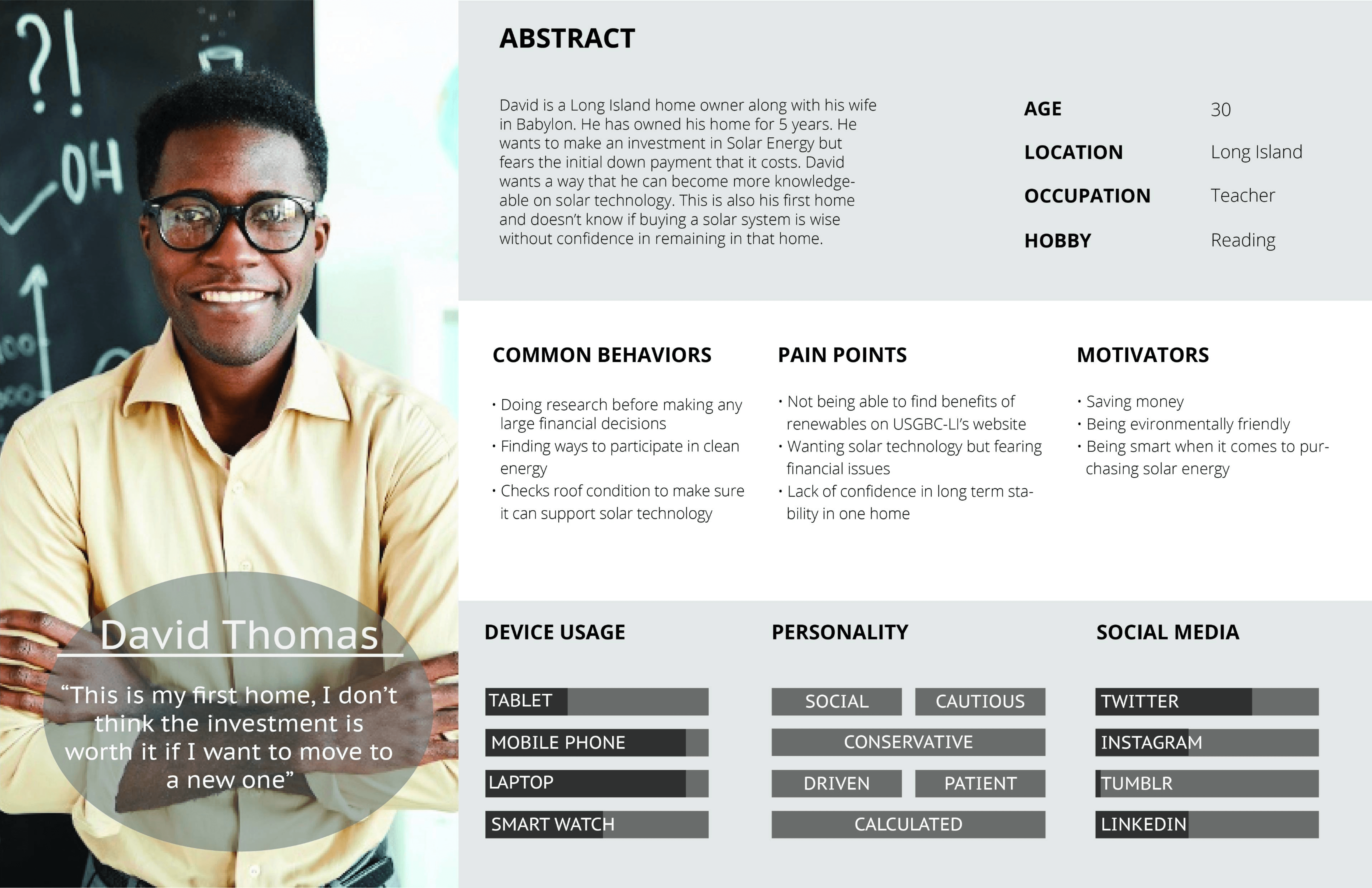
These users are the primary audience. They may be interested in solar energy but feel unsure because of cost, roof conditions, confusing terminology, or negative sales experiences.
Business Owners
This group is more concerned with operational value, financial impact, property feasibility, and public sustainability image. They may want to support renewable energy, but need to understand how it connects to business benefits or property limitations.
Renewable Energy Partners
This group supports the project from the organizational side. They need the design to communicate clearly, represent renewable energy accurately, and encourage public participation without overwhelming the audience.
Personas


Empathy Maps


Journey Maps

Sketching the Interaction
Brief Sketches


SWOT Analysis


Final Product
An Informative Brochure
Our final product for Simple Solar was a public-facing educational brochure designed to make solar energy alternatives easier for Long Island residents and local business owners to understand. After researching barriers such as cost, roof conditions, home stability, credit concerns, and past solar experiences, our team focused on creating a communication piece that could explain renewable energy in a more direct and approachable way.

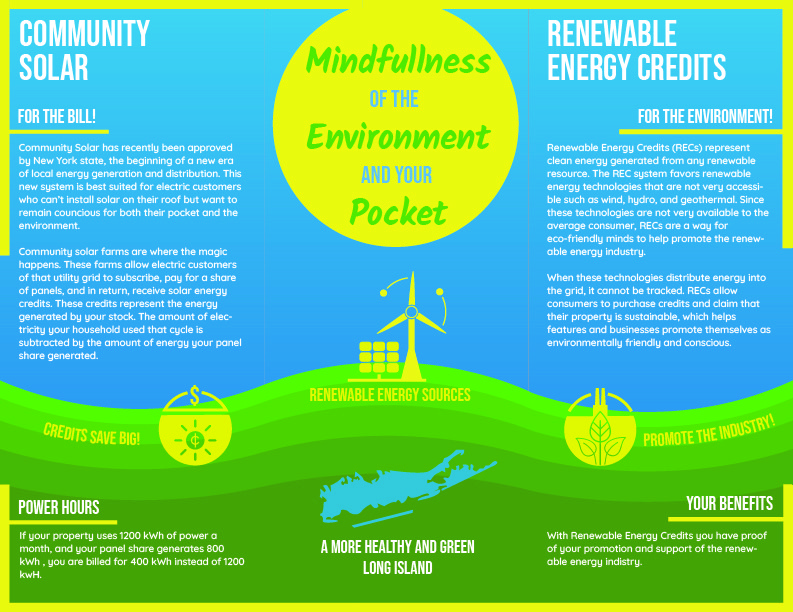
The brochure was structured around two major ideas: community solar and renewable energy credits. Instead of presenting solar as something that only works for people who can install panels on their own roof, the final design explains that residents can still support renewable energy through shared solar programs and energy credits. This was important because the survey research showed that many users were hesitant about solar because of financial concerns and property limitations.
The outside of the brochure introduces the project through the Simple Solar identity, Long Island’s role in renewable energy development, contact information for Empower Solar and USGBC-LI, and a QR code for users to continue engaging with the project. The inside of the brochure breaks down the educational content into simpler sections, explaining community solar “for the bill,” renewable energy credits “for the environment,” and the overall benefit of supporting a healthier and greener Long Island.
The Takeaways
This project helped me understand that sustainable design is not only about promoting better environmental choices, but also about making those choices easier for people to understand and access. Solar energy can feel overwhelming when residents are faced with unfamiliar terms, cost concerns, roof requirements, permit issues, and unclear program options. Through this project, I learned how important communication design can be when the goal is to turn a complex system into something approachable.
A major takeaway was that many people are not against solar energy; they simply need clearer information before they feel comfortable considering it. By researching Community Solar, Renewable Energy Credits, and local Long Island barriers, I saw that education can play a direct role in helping residents feel more confident about renewable energy alternatives.
This project also showed me the value of designing with local context in mind. Long Island has strong potential for renewable energy, but the way that information is presented matters. The final brochure became more than a visual piece — it became a tool for explaining options, reducing confusion, and connecting residents to organizations that can help them take the next step.
If I had more time, I would expand Simple Solar into a stronger digital experience, such as a website or interactive guide where residents could compare solar options, check eligibility, understand possible savings, and find local resources based on their specific situation. The project still has room to grow, but it gave me a stronger understanding of how design can support environmental awareness, public education, and community action.
Like (Love) My Work?
Contact me to discuss your case!
I am currently based in Long Island, NY.